Positive Procrastination

Good morning and happy St. Paddy’s Day!

After my last post I’ve been thinking a bit about writer’s blocks and procrastination, both of which are not foreign to me. Maybe I’ve been experiencing a little bit of both in the last month, though thankfully nothing major.

One day while procrastinating on social media, I found this:

Writers BlockYes. I think many of us go through this in graduate school. A lot.

But, one of the strategies that has been helpful for me is to make sure that most of my procrastination is positive. Usually I begin procrastinating when I need a break; therefore, I typically try to change my pace of things and do something active. Even if it’s wash a few dishes and walk down to a nearby café for a change of scenery.

I’m not sure how many of you read this article in January by the New York Times about positive procrastination, but since I was just beginning to seriously write when this came out, it caught my attention.

http://www.nytimes.com/2013/01/15/science/positive-procrastination-not-an-oxymoron.html?_r=0

So what have been my procrastination successes in the last few days? Well, taking notes and reading, reviewing fieldwork, developing a guinea pig/kuy substitute recipe, taking time out to take care of my health, plan for the Mariachi de Uclatlán 50th reunion in May, and this morning, I took an hour to update my blog. In particular, I worked on the Nina Pacha’s Library section page. After getting some great messages of support from some Kichwa speakers, I decided to take a bit of time to finally put up some of my children’s story translations. It was something I have been meaning to do for a while! Check it out, and if you have any beloved stories from your own childhood that you think would be great to translate, let me know. I’ll take time out of my busy schedule sometime in the future to procrastinate and work on my translation chops a bit.

In other related news, I was scanning my blog reader and saw this post by Samantha Grace. She writes about stress relief and making it through comps (aka comprehensive or qualifying exams, aka a month or so of the most intense studying and birthing of ideas in your academic career). I really liked how she conceives of them as her special rite of passage, which helps her own them like a boss. Some of what I have found to be stress relief, in fact, has been this positive procrastination idea.

There are a few other things I would add to her page and list of approaches to comps, but I’m going to have to hold off on that for now, at least until I’m in need of another break from work and other daily routines (i.e. it’s time to go grocery shopping, a girl needs more  than green beans and eggs in her fridge to get her by this week).

Til next time!

Research Tangents & Writing the Dissertation

Yesterday, I was invited to perform and present at the Latin American Institute’s symposium about medicine, health care, curing, and indigenous cultures in Latin America. It was a wonderful event featuring some fascinating research. For the section in which I presented, I performed with two friends from the Ethnomusicology program, and each of us gave a brief introduction to topics related to our research areas, health, music, and indigenous societies.

My presentation was about the cultural toll of the cholera epidemic on the flute tradition I’m studying. Although I don’t think that the cholera issues will be a major part of my dissertation, after hearing the feedback from fellow presenters and attendees today, I’m looking forward to pursuing the issue in a future article.

Since my last post, I have been preoccupied with revamping my prospectus and literature review, writing a grant application (hopefully the last time before I earn my PhD!), and beginning the writing process. It was really nerve-racking at first, but Chapter One has come along nicely, and I’ve already begun work on Chapter Two.

Although reading and writing can sometimes feel like the boring part of fieldwork and research (and a few years ago I would have assumed I’d hate every minute of it), writing can be a really productive time and great way to meditate on all sorts of issues that are important to you and those you collaborate with in the field.

Despite finding more enjoyment in writing now, it was quite hard for me to get my writing groove going at first. Thankfully, though, I have had great advice from friends, professors, and the UCLA Graduate Writing Center. One of the books that has been helpful (and makes for a quick read while on the bus) is Writing your Dissertation in 15 Minutes A Day. Sections are tailored for different stages of writing, so you only reference this book every now and then depending on how you progress or get stuck. The advice tidbits about “zero draft,” free-writing approaches, and sticking to word/page limits rather than time limits (aside from writing at least 15 minutes a day) have been immensely helpful.

I wonder though, what have you people out there in [dissertation/book/article]-writing lands found to be helpful to push through writing slumps?

To keep a good writing schedule or modify one that begins to not work as well?

How do you reward yourself to encourage feeling positive and not overwhelmed about the writing?

And have any of you tried writing groups with fellow graduate students or scholars from other disciplines (or as one of my professors calls them, with fellow intelligent ignorami)? What worked and didn’t work? What would you recommend? I’m thinking of beginning a group soon, though most of my cohort is still in the field, so I will be reaching out to people in other departments.

Thoughts? Insights? Advice? Recommendations?

Mikupaylla! Some of my favorite food in Otavalo

Hello again. My final weeks in Otavalo went by faster than I anticipated and most of my days were filled with fieldwork, hiking to nearby villages, wrapping up interviews, and saying good-bye to my friends and compadres.

Although I’m back in the States, my fieldwork has not ended (and the same goes for this blog!). For now, much of my time will be devoted to writing the dissertation; however, my travels will lead me back to another stay in Ecuador sometime next year, and I will also be looking into some other archives to visit along the way.

During this transition between re-acclimating to graduate student life in a big city, I want to take advantage of posting some of the posts I drafted but didn’t have a chance to flesh out before leaving.

Today’s topic: A culinary tour of Otavalo (from a sort of touristy, sort of local perspective).

* Refer to this map to find the intersections I list below if you plan to be in Otavalo.

Local Specialties

Plato Típico de Yamor: Sucre / Moreno

Me and Malki enjoying the pregón/opening night of the Yamor festivities

The place to get the best of the best is located in a parking lot near the cathedral and the municipal offices surrounding the Parque Bolivar. A number of other establishments offer this menu throughout the year, but if you are visiting Otavalo around the Yamor Festival (September), be sure to swing by here to enjoy your fried pork (fritada), potato cakes (called tortillas or llapinkachus), a salad of onion, tomato, lettuce, beets, and a squeeze of lime (ensalada), a little empanada with some sugar on it, and chicha de yamor, a fermented corn drink made of all 7 local varieties of corn (white, yellow, black, chulpi, canguil, morocho, and jora . . . canguil is the type used to make popcorn, by the way).

Fig and Cheese Sandwich (Sanduche de higos y queso): Morales / Atahualpa

Although I’m pretty sure I’m lactose intolerant, this is one street delicacy of Ecuador that I will make an exception for anytime. The figs are cooked and sweetened and typically served hot with a slice of the sharp, mildly sour local cheese. A great snack on a chilly day – or any day – in Otavalo. During my Kichwa classes in 2010, my professor and I would typically take a break to walk through the markets, practice some of my Kichwa with strangers, and pick up these tasty little bites from this corner store. As a side note, another street food item that goes down well on a chilly day is the roasted banana you can find being grilled on street carts near the Plaza de Ponchos or other busy market areas of downtown Otavalo (though these can be a bit acidic, for those with sensitive stomachs, I’d recommend not eating this on an empty stomach or over exaggerating).

Mama Rosita: Sucre / Montalvo

This is the place that made me fall in love with quimbolitos back in 2010 (see also one of my first blog posts here: https://ethnomusitia.wordpress.com/2012/04/17/early_homesickness/). It’s a modest food-to-go restaurant that offers a seat in the kitchen amidst flour and corn husks if you want to stay and chat, get off your feet, and sip on some coffee (Nescafé powdered coffee) with your quimbolitos or humitas (like a Mexican tamal de elote). Mama Rosita has been running her kitchen for a few decades and boasted stories of serving food to celebrities and politicians from all over the world who have come to visit Otavalo (including one of the Kennedys!). If it’s a nice day, go grab one or two of these tasty treats and put your feet up in Parque Bolivar as you enjoy some good people watching and singing trees (speakers were installed near some of the trees so the locals joke that they sing).

Foreign Fares

I’m typically happy eating and doing as the locals do and rarely complain about missing food from home; however, when you’re living abroad for six months there are certain dishes you begin to miss. These next places became my personal retreats when nursing any homesickness that crept up . . .

Shenandoah Pie Shop: Salinas / Jaramillo

The Shenandoah Pie Shop is in the Plaza de Ponchos located on the southern side near the intersection of Salinas and Jaramillo. This place doesn’t need much introduction since many tourists and ex-pats find themselves here when craving a gringo-style dessert. Occasionally I’d come and would usually order the Maracuyá (Passion Fruit) or Naranjilla pies (like a lemon meringue pie). Great place to grab a dessert when you’re missing home, but when it comes to something like apple pie, it doesn’t come close to my mama’s!

Taco Bello: Laquerica / Bolivar

I’ve made the unfortunate mistake more than once of trying to find good Mexican food in other cities outside of Mexico and the States (a brightly decorated luchador-themed burrito restaurant in Madrid was most likely the worst meal I’ve had in my life). Thankfully, Taco Bello was able to satisfy my cravings while away from my L.A. taco trucks for so long. Although wacky 80s and 90s music is almost always playing on the TV, and the Angelina Jolie and Beyoncé posters thrown in with the Mexican sombrero and La Virgen de Guadalupe make the decor seem really strange, they are not an indication of how the food is. I frequented this place to get my fix of straight-forward tacos (flour tortillas only), decent salsa and guacamole, and the occasional Ecuadorian-ized pozole. The owner is friendly and used to live in Culver City, so we had some good chats about missing our L.A. stomping grounds. Based on the reviews, don’t waste your money or appetite at Tabasco’s near the Plaza de Ponchos! Head down calle Bolivar, passing the municipio, and take a seat at Taco Bello.

* Even though Laquerica isn’t on the map, the street is there. Walk south on Bolivar and it will be on your right just a few blocks after the Municipio.

Pizzería Oskar: Quito / Roca

Going along with the theme of foreign food in Otavalo, two other places that I fell in love with are Pizzería Oskar and Juanita Marquez, conveniently located across the street from each other not too far away from the main bus terminal.

Typically, Italian food abroad has been the source of many evenings of disappointments for me (La Fontana de Trevi being one of them in Otavalo). Where can a Mexican-Italian girl from New York find a decent pizza or plate of pasta!? In fewer places than you’d think. Fortunately Pizzería Oskar has what comes closest to a delicious pizza crust and pizza sauce, plus it’s dirt cheap and has better portions than any of the other pizzerias in the area. They also sell whole pies and deliver!

Juanita Marquez: Quito / Roca

The Choriarepa. So good, I couldn’t wait to dive in before taking a picture.

Across the street is Juanita Marquez, which is a new Colombian restaurant that opened this past March. When taking the bus on Roca st heading home one April afternoon, I couldn’t help but notice the bright pink paint job that the new owners gave the place. I wandered in here one day when I was in desperate need for a good, strong coffee to pick me up (none of the powder bs that you get served in most places). Having worked for the Smithsonian Folklife Festival’s Colombia exhibit last summer also made me curious to try the arepas here. I fell in love with the food and befriended Carlos and his wife (the owners), who were also new to the area. Later on, I brought along some of my Colombian ex-pat friends for a lunch outing. They couldn’t stop talking about how, after close to two years of living in Ecuador, they hadn’t come across Colombian food this fantastic!

Although I haven’t tried everything on the menu, I can say that the soups were great, the coffee and cappuccinos excellent, and I’m still drooling over my choriarepa (arepa with chorizo and maduro). In fact, the day I took this photo I had to eat half the plate before taking out my camera . . . I just couldn’t wait! When I get back to Otavalo, this will be one of the first stops I make after hopping off that bus!

Cafés

Before leaving L.A. in March, I finally crossed over to being a coffee drinker, despite my young adulthood avoiding the impending doom of a caffeine addiction that I would constantly tease my mother about. Perhaps there were too many memories of being in elementary school and having teachers subject you to their coffee breath and stained teeth when they kneeled down to talk directly in your face.

Granted, this was a 5 or 6 year process that began with student teaching and my mentor teacher Trish pouring me a cup of coffee during our breaks, which I would typically sip on, drinking only half before it got cold, and then toss it. Grad school coffee breaks during seminars were the next chapter of easing into the trap. Over the last few years I’ve come to realize that I study better at café’s, since food and drink are there if I get hungry, and it’s just loud enough where I won’t have the burning desire to punch that one obnoxious library person or two in the groin or spill my beverage on their laptop “accidentally.” (This is a frequent occurrence at UCLA, sadly, and it is by no means just Asians who are noisy in the libraries).

Finally, preparing for my Ph.D. qualifying exams is what pushed me over the edge. During endless months of studying, I finally caved and became a regular black coffee drinker. That’s right. No sugar or cream. Cheap or sometimes free refills. This was the most economic way to have permission to stay in a café and study for hours on end without gaining 50lbs from all the hours of caloric accumulation while sitting on my rear.

It was only a matter of time before I’d go searching for a café that could support me and my hours of studying.

S.I.S.A.: Abdón Calderón, entre Bolivar y Sucre

S.I.S.A. (first floor cafetería) quickly became my go-to place for when I needed to get work done out of the house or meet with Patricio (one of my Kichwa professors and my fieldwork buddy) to plan for the next day of interviews or trips. The hours are good (open until 10pm), coffee is decent, food is a bit pricier than other shops but tasty, and service is better than the upstairs café. A coffee, tea, or jugo natural was my usual order, and when I was craving dessert after a long day of fieldwork, I’d ask for the ensalada de frutas with granola and syrup. The owner Washington, or affectionately called “Washo,” is one of Patricio’s friends and was always a friendly face to see at the end of the day. They also have plugs and free Wi-Fi.

Nizza Cafe: Montalvo / Roca

After three months of intensive planning and interviewing, Patricio and I were sensing that some of the waiters at S.I.S.A. were sick of seeing us and kicking us out at 10 every night! So one evening as we were headed to S.I.S.A., we passed this café that had just opened. We decided to head upstairs to see what the menu was like. It was exactly what I would have hoped for: a simple, straight forward café where I could get a cheap, light sandwich and a drink. When I needed to change things up a bit from the S.I.S.A. routine, this was a welcomed alternative. As it turns out, the owner’s niece is thinking of moving to Los Angeles, so we quickly bonded over talking about her travel plans and life in the States and Latin America.

Mikupaylla! Cheers and enjoy!

And there you have it! Otavalo (and Ecuador in general) has some of the most scrumptious food I’ve tried during my travels, and quite possibly with some of the most shockingly cheap prices (a pound of berries for $1 is one of my favorite price differences!). When I was living abroad in Spain, most of the friends I made were fellow musicians or worked at the restaurants and bars I frequented, and after this trip, my time in Ecuador proved to be no different. Where you can find great food you can also find great friends. As Thanksgiving draws near, I can honestly say that I’m thankful for the people I have met in Ecuador and across this planet who have welcomed me to my homes away from home, nourishing my life with great meals, memories, and friendships.
Teleferiqo in Quito

Since my last post I have been preparing to head down the home stretch of this chunk of time in the field. The last three weeks have been significantly busier due to organizing interviews and my research materials, but in between work and some brief meetings with Juan Mullo Sandoval, one of my mentors here in Ecuador, I got to squeeze in some sight-seeing.

One of the things I’ve wanted to make sure I see this time around was the Teleferiqo in Quito. During the earlier half of my trip, Quito saw a lot of cloudy, drizzly days that made it less than optimal to head up the mountain, but I was determined to get up to the top and see Quito from 4,100m (~13,450 ft) above sea level. A couple weeks ago, I finally made that trip with Patricio.

The ride up (several minutes)

Although it may be slightly pricier than some other touristy options in northern Ecuador (around $15-20 including taxi rides), I thought the trek up to the top was completely worth it. I especially loved seeing all the major volcanoes that I know of from one spot, as well as the landscape opposite Quito. The uksha (tall toasted-colored looking grass that always has a brilliant sheen to it) was just as beautiful as I saw in Mojanda during my first trip to Ecuador.

Blue skies smiling at me!

If I could do it again (and trust me, I plan on heading back if anyone decides to visit me while I’m here, especially when Ben comes to Ecuador with me in the future), I’ll make sure to bring some food for lunch/a picnic, and really give myself more time to enjoy wandering the paths and taking in the views of snowy and jagged mountain tops, shiny hillsides and mountain sides, and urban sprawl.

This slideshow requires JavaScript.

Hopping Continents

Holy crap, how fast a month flies by!

I got back to Otavalo two weeks ago following a short trip to New York in July. The break came conveniently half-way through the six months that I will be here. Now, I know people typically stay a year or two for dissertation fieldwork (with Ecuador’s visa restrictions, that wasn’t really an option for me to stay that long in one trip), but six months is still a long time to be away from loved ones.

Six months is also a good chunk of time to be with hosts. As much as one may love their temporary home, and as much as their hosts may enjoy hosting them, everyone needs a break from each other once in a while.

A great view of Quito from the plane

Me and Crix, a great friend from undergrad at Crane! Ran into her and her husband on the way back from their honeymoon as I wandered around aimlessly to amuse myself at the Miami Airport! Great serendipitous start to my trip 🙂

The main reason I went back home (well, to one of my homes!) was to be in a best friend’s gorgeous wedding at Letchworth State Park (if you’re from NY and have not heard of this place, you must visit. Actually, if you’re from anywhere and love nature, you should visit it. It’s called the Grand Canyon of the east coast, and it’s breath taking!)

Ben and I sneaking away for a moment to see the upper falls together

It was also a nice excuse to see family, introduce Ben to the east coast, and catch up with friends still in town. I was pleasantly surprised to have some relatives from Florida up to visit, as well as host my dear friend Sally and her son as they swung through CNY and the north country! Another highlight of the trip was finally getting to go on the Maid of the Mist at Niagra Falls. Check that off my bucket list of things I’ve wanted to do since I was a little girl!

On the boat!

I had a sudden urge to try and go down over the Falls in a barrel. The roar of the water was thrilling.

Hanging out with my brother and Ben in Central Park

A view of the Manhattan and Brooklyn Bridges, looking out to Brooklyn

Our last night in Syracuse. Ben had quite the food tour during his trip

Unfortunately, it all went by too quickly and I left before completing half of what I was hoping for. Next time, Syracuse! I will be back before you know it! I miss your seasons and hot summer nights with cicadas singing away.

Even though it was hard to leave everyone back home, there were a couple exciting things to look forward to upon my return to Otavalo. The most immediate was officially becoming a godmother (achik-mama)! We kept the after party small, and I learned that with the indigenous community, it’s customary that only those who will help serve the food at the party are those who accompany the compadres at the mass.

What I gave to my compadres and goddaughter, the dress was a gift from Ben’s mom and fit Jessie Marina perfectly!

Yolanda (basically my big sister), her daughter Nina, and myself, all dressed up & ready for the baptism

Marina, Jessie Marina, and myself waiting for mass to start

Group shot after the mass finished

Another thing I learned about giving out food to people is that when I received gifts, such as the mediano (big bowl of potatoes and meat), cases of beer, buckets of aswa (chicha), cartons of mango juice, or giant 2.5 liter bottles of soda, it was acceptable for me to request others to help pass it out to other guests. For example, with the drinks, I could go up and offer a drink to someone. If they accept the drink, you hand them the container of the drink or set it by where they’re seated. They’ll typically offer you a drink after (don’t forget to say upyapashun once you accept the cup!), and then go around passing it out to other people. Later, if people come up to you and offer you drinks, it’s also polite to serve them a drink by saying upyapashun before taking the cup. If they’ve had too many people make them drink, they might pass and insist you drink, but it’s polite to offer it to them first.

First Course: caldo de gallina (chicken soup)…so delicious!

Marina, Jessie Marina, Myself, and Lauro eating our caldo at the head table

Second Course: Beans and toasted corn on the left, with a porkchop over corn (called mote/choclo/maíz), with a side of tomato and onion salad on the right…oh yes…and DELICIOUS yellow cakes with raisins for dessert.

The blue bucket of aswa/chicha, various bottles of soda, cartons of juice, and the mediano (large bowl of potatoes and chicken) were also gifts. My compadre Lauro’s sister was kind enough to help redistribute the mediano given to me.

Getting the party started! Dancing with Sisa (my goddaughter’s older sister) and Maya (Sisa’s and Jessie Marina’s cousin). Eventually we got all the adults up too!

Today is the first birthday of my goddaughter and last night I surprised her parents with a cake and some gifts. It was a low-key gathering, but I was really excited, since I had been working on translating the books I bought for her birthday way back in March! For her birthday, I translated The Giving Tree by Shel Silverstein, The Very Hungry Caterpillar by Eric Carle, and a Curious George book. While buying the cake yesterday with my host brother and previous Kichwa teacher, Patricio, I also picked up something a bit more traditional: a small blue and white chumpi belt that she can use with her anaku skirts for the next few years.

Torta fría with fruit on top

A little blurry, but I only had the iPhone on me

Darek (one of Jessie Marina’s brothers), Lauro, la Jessita, and Marina.

In terms of fieldwork, now that I’m back and the flautists are no longer tied up with summer solstice festivities, I’m entering into the next phase of the research: INTERVIEWS! Before this point I was prepping by conducting informal discussions and interviews, as well as making observations that will inform how and who I interview. Now it’s finally time when I’ll be getting my hands a little dirtier with ethnographic documentation. Moleskin notebooks, pencils, and camera bags will now be a regular staple of my going out wardrobe . . . all I’ll be missing is my khaki safari outfit!

Ethnomusicology chic

Summer Solstice

Around these parts the summer solstice festival is typically referred to as Inti Raymi (Festival of the Sun). The celebration and related ceremonies are likely one of the influences from the Incas who came up from the central and southern Andes and conquered local ethnic groups about 30-50 years before the Spanish rolled in. In fact, it’s likely that before the Incas invaded, the people of this area worshiped other aspects of nature, mainly water, corn, and the moon (but you’ll have to check out my dissertation later on for more info about that!)

Here with the Otavaleños, this time of the year is also called Hatun Puncha (Hatun = Great, Grand, or Sacred; Puncha = Day, Time, Time Period, Epoch). Previously, the timing was more closely associated with the crops and natural events; today, however, the festival is attached to the Gregorian calendar, with the major part of the festival spanning from June 22nd to June 29th (this varies depending on which community you’re in, and some neighboring towns start earlier or later).

In short, Hatun Puncha-Inti Raymi celebrates the peak of the masculine time of the year when beans and corn are harvested. It’s a time when the world becomes highly unstable and charged with energy before finding a renewed sense of balance. As I’ve been told, the atmosphere becomes saturated with all sorts of spirits for the festival, to the point where on some nights, it’s better to stay inside and away from them because they can be highly volatile (especially if you’re a woman or you’re not out with a group of musicians).

During the week, musicians and dancers (almost always men) can be heard combing through the village, dancing on the patios or in the kitchens of people’s homes. In some ways, it superficially reminds me of a mix between Christmas caroling and Halloween, mainly because musicians donning costumes go from home to home playing music and getting fed in return (LOTS of corn/mote, chicha, boiled alcohol mixed with mulberry juice, and potatoes).

The festivities are officially kicked off during the night of June 22nd when people go out dancing and playing music, ending up at a sacred spring or body of water (e.g. Peguche Waterfall) sometime around midnight to partake in the ritual bathing known as Armay Chishi. Basically, despite the biting chill of the evening, people strip down to their chonies and purify themselves by bathing with water and stinging nettle, gaining energies that will accompany them throughout the festival. The next couple days, people keep dancing throughout the night and into the next morning, taking a bit of time to relax or nap between 7am and 12pm, typically, before waking up and preparing for the next round of dancing.

My Compadre Lauro and I dressed up as a wolf and rabbit for Hatun Puncha when we went out to dance/play music

Later, on June 25th, 26th, and 27th, there’s the taking over of the plaza near a church (Toma de la Capilla). In Otavalo, dancers/musicians begin dancing in the late morning in their hometowns, going from house to house. Later, groups from the villages surrounding the downtown area gather at the San Juan Capilla, which was built over a Pre-hispanic ceremonial ground (the general term is kuri kancha or golden court or field . . . notice that the Spanish word for field – cancha – comes from Kichwa/Quechua). During the tomas, groups proceed throughout the grounds, stopping to play in corners, charging through the middle and along the sides, eventually heading up to the patio in front of the church and invading the chapel.

*Side note* This is also a great place to get warm, homemade taffy called melcocha, which I didn’t know about until my awesome guests Sarah and Matt told me about it. See their blog for pictures (coming soon!) of my host brother/Kichwa teacher Patricio and I enjoying strawberry and panela (brown sugar, sort of) melcocha! http://www.shapiroadventures.com/2012/06/touring-in-middle-of-world.html

Patricio and I snacking on some melcocha taffy (photo taken by Sarah and Matt)


Dancing in homes before heading out to the Capilla (Check out Sarah and Matt in the left corner!)

Dancing in front of the church

Dancing in front of the church

Once inside, most people take a seat in the pews or hop in line to receive the San Juan blessing, interestingly enough, not given by a priest. This is also when the infamous tinkuy fights tend to break out (referred to by Wikipedia as a martial art of the Andes). I saw a group charge the group from the town where I’m staying on Monday. Large tinkuy fights did break out on the third and final day, though I wasn’t able to be there when they happened.

Getting blessed after taking over the chapel

The 28th is technically the last day of Inti Raymi/San Juan, which is followed by the Festival of San Pedro/Woman’s Day/Offering of Chickens (Entrega de Gallos) on the 29th. On the 28th, everyone burns small fires in front of their homes in order to push the spirits out and back to their worlds. Although they burn small branches with leaves, they also tend to throw in old items from the home that they no longer need, like old clothing. The only rule is that everything needs to be burning before 5pm that evening. It was absolutely breathtaking, both in the sense that it was incredibly uncomfortable to breathe but was a beautifully impressive view.

Fire outside of the home

Fires burning in all the homes, sending the spirits away

On Thursday, when I was heading up the hill toward the community house to take pictures of all the fires burning, I passed a few of the women peeling potatoes in preparation for the Entrega de Gallos. As is customary when you pass by people in the community, I bid them all good afternoon (alli chishi) and didn’t expect much conversation to happen after. I was a bit shocked when, in response, some of the women started joking around with me in Kichwa, telling me that I should come help with peeling the potatoes and hang out with them. I quickly admitted that I am, in fact, terrible at peeling potatoes and I am dreadfully slow at the task (I like eating the potato skins!). That didn’t matter and they all egged me on to come back, take pictures with them, and help out. It was one of the first times that complete strangers in the community invited me to hang out like that, and it was fun to sit around and hear them gossip and joke about all sorts of things…especially the men 😉

Gossiping and peeling potatoes

That basically sums up my first full Inti Raymi. Although it was great and I’m looking forward to next year’s celebration, it’s a big relief to get back to normal sleep and eating schedules in the meantime!

Recent and Current Festivities

Apologies for not posting more earlier, but the past few weeks have definitely been packed! Most of what I’ve been up to has been related to Hatun Puncha/Inti Raymi (summer solstice festival), though there are a couple other things I thought I’d like to mention before I elaborate more about how I’ve been celebrating Inti Raymi with my host family.

Ecuador vs. Colombia FIFA Qualifier

On June 10th I was lucky enough to make it to the Ecuador vs. Colombia FIFA World Cup Qualifying game. I say lucky enough because (a) I almost wasn’t going to go, but decided last-minute that this was going to be a great game against two neighbor/rival teams that I did not want to miss; (b) thankfully a place in Otavalo had two left-over tickets that were a reasonable price; (c) for me, it was going to be my only chance to attend a world cup game (albeit pre-tournament) for at least the next decade or two; (c) even though many people showed up with tickets, they didn’t let everyone into the stadium since they over-sold tickets and Atahualpa Olympic Stadium in Quito was full two hours before the game even started.

I wasn’t sure who was going to go with me, but when the owner of the sports store who was selling the tickets told me that they added two extras to his batch, I snatched those up like a kid diving for her favorite candies in the storm of sweets that bursts out of an obliterated piñata.

The morning of the game, I casually asked my host brother Segundo what his plans were for that Sunday, which were as I expected, take care of some chores before tuning in to see the game on cable. When I told him that he should go to Quito with me to see the game instead, he was in disbelief and I had to show him the tickets to prove that I wasn’t pulling his leg.

Segundo and myself, decked out in our Ecuadorian national jerseys, pumped to head out to Quito to see the game.

In the end, we left right after breakfast, made it to Quito in great time, and hopped in line after grabbing a quick lunch. By the end of the day we had been on our feet for close to 7 hours or so (between walking to the stadium, standing in line for 2 hours, standing in the stadium for four hours, and then walking back to the Trole), but it was totally worth it! Tons of Colombians came down to see the game and everyone was jived to be there. One of the pluses, I felt, was that there weren’t any large TV screens to distract from focusing on the game. Better yet, Ecuador freakin’ won in what was a close match!!

One game definitely wasn’t enough, though, so I plan on catching Ecuador vs. Bolivia in September . . .

Prepping to be a Godparent

Several days later, I was hanging out in Ibarra with the mariachis for a rehearsal and gig when I kept getting calls from my host family. My host sisters had called me to see what I was up to that night and told me it was urgent that I be back at the house by 8pm.

At first I was worried, but once I was assured that everything was just dandy at home and everyone was okay, I began to suspect what eventually was about to happen . . .

In Kichwa Runa culture, when someone accepts to be the godparent of a child, the parents show up with a bunch of food and drink (called the mediano) in order to give thanks and show appreciation for someone agreeing to take on such an honored and important long-term responsibility. (This also happens when a man requests his girlfriend’s family’s permission to have her hand in marriage, as well as to thank those who agree to be godparents of a marriage). When your receive the food there’s a certain way you have to redistribute it and certain things that the godparent should eat instead of redistributing (e.g. most of the kuy or guinea pig that is given, though some was given to my compadres). Of course I am still somewhere pretty early on the learning curve of understanding all of the intricate ways of accepting and redistributing food in these moments, so my host mother helped me hand out some of the food to the family and neighbors.

Myself with all of the food for the mediano

A close up of the food: Bread, bananas, other assorted fruits, potatoes, kuy, an entire chicken, soda, and fresh milk. Absolutely delicious!!

Me with my compadres, goddaughter, and my little host brother and sister

Passing out some cola to everyone . . .

Although sometimes these gatherings end in a mini-party, my compadres Marina and Lauro kept it a bit more relaxed and we all just chatted about ideas for the baptism party and some of the things we have to take care of next in preparation for it. So far, the date is still set for early August, and I’m definitely looking forward to sharing with you all how it goes.

(And in case you’re wondering, I still haven’t finished all of the food, despite giving some to three of our neighbors and multiple rounds of gifting fruit to the family during meals!!)

Presentations and Inti Raymi

What has kept me the busiest in the most recent days are all of the traditional flute presentations I’ve attended just north of Quito (in Calderón/Carapungo) and Inti Raymi events. Since it’s late on Monday evening and I’m beat, I’ll go more into detail in an upcoming post about how these presentations went and what exactly Inti Raymi is, but until then, check out these links about the basics of the festival (for those who speak Spanish, if not, try Google Translate or another service to get the jist).

http://www.elnorte.ec/index.php/opinion/editorialistas/19001-la-esencia-del-inti-raymi

and

http://www.otavalosonline.com/mushuk/index.php?module=Pagesetter&func=viewpub&tid=3&pid=150

(Be sure to check out the photo of my host father at the bottom of this article!)

As for now I’m headed to bed. Munchi (g’night!) and kayakaman (until tomorrow/later)!

Saca Warapu! (Take out the Chicha!)

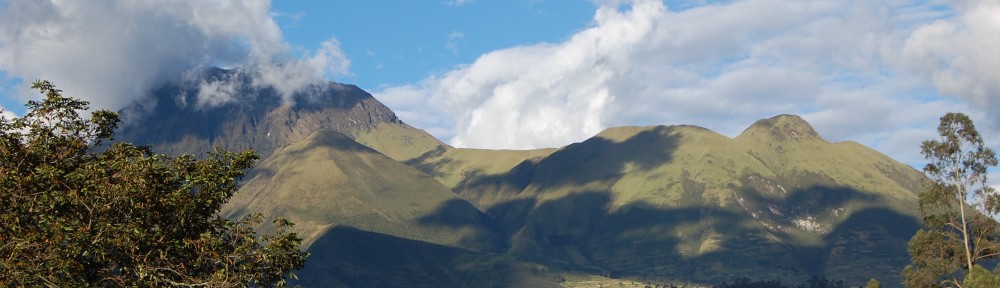
Anticipation for the summer solstice and related festivities (here where I live the full name for it is Hatun Puncha Inti Raymi, literally “Great Epoch, Sun Festival”) has been building up slowly but surely over the last month. The corn plants have faded from an emerald green to a roasted marshmallowy brown, providing visual cues across the village that it’s time for harvesting and for the festival. The weather has also shifted. Less rains are rolling in from over the Imbabura volcano (pictured in my blog banner), causing drier, windier, and dustier conditions during the summer-like days, whereas the cloudless evenings are growing progressively chillier. Some weekend evenings (and by evening, I mean anytime between 2am to 7am), I’ve even heard groups of musicians going through parts of town, playing Inti Raymi music as they rehearse new songs or kick off the rust from some of the older tunes.

What people eat and drink also are indications of the shifts of the season here. Primarily, some of the foods associated with the solstice celebrations are aswa (more commonly known as chicha) and cuy (guinea pig). And for an upcoming baptism in the family, I’ll be helping with preparing both!

Aswa/Chicha

Typically aswa is a fermented corn drink, though my host mother and sisters explained to me that here in northern Ecuador, you can make it with other grains too, such as with oats, wheat, and rice. In other parts of the world, people chew the corn or spit into the mixture because human saliva helps the fermentation process; however, as I was told yesterday, that doesn’t happen where I am.

Instead, when collecting the dried kernels from ears of corn, spoiled kernels and kernels with small sprouts growing out of them are set aside separately from the corn we eat on a regular basis. My host sister Yolanda explained to me that these kernels are used because they ferment more easily and otherwise wouldn’t always be eaten. Once off the cob, the corn is set out to dry in the sun for approximately three more days.

Drying corn…yellow corn to the left and hora and spoiled kernels to the right

Corn perfect for chicha/aswa making!

Corn perfect for chicha/aswa making!

Next, it is stored until you can have it ground into a flour (haku). Traditionally this was done with large stones in the home, but most homes no longer have these as part of their kitchen. So in our case, we had to send it to a place to have it ground.

Corn flour

On the day you start making the aswa, you bring water to a boil (timpuna in Kichwa) and then add the flour in a 3:1 ratio  (3 liters of water:1 pound of flour). Let it keep a rolling boil for an hour, stirring (kuyuchina) occasionally.

Letting the chicha boil

My host mother stirring the chicha

After the hour is up, pour (talina) the mixture over a strainer (shushuna) and into the recipient where the aswa will remain for the next few days. Occasionally empty the contents of the strainer into another bowl or bucket and save for the last batch of boiling. (In the household here, once everything has been boiled twice, it’s given to the pigs to eat).

Getting some chicha to strain…

Pour over the strainer…

Leftovers from straining

In addition to using a variety of corn flours mixed with oats, rice, or wheat, people usually make the chicha with unrefined brown sugar (mishki in Kichwa, also called panela in Peru and Ecuador, piloncillo in Mexican cuisine), and on occasion will add diced fruit (with the rinds to help the fermentation!). For this batch, we added some pineapple. Around lunchtime today, we’ll add the brown sugar (about three pounds of it! in a 1:10 ratio with the flour used).

Chicha with pineapple

Cover the barrel/container and let sit in room temperature. The minimum time for letting the aswa sit and ferment is about 3 to 5 days. If you really want strong chicha, you can leave it to ferment for up to a week, but the family here prefers to keep it a little fresher and less alcoholic (another reason why we waited a day to add the sugar).

Exchanging of Fermented Drinks

During our conversations over meals, the family likes to ask me about food in the States and elsewhere, especially whether or not we have anything like what I eat here. When we were talking about aswa, I told them that there were some beverages (aside from beer) that I thought were similar enough, such as apple cider and tepache.

They decided that I had to make them and were eager to see what these two were all about, and since I’ve been having fun getting my hands dirty in the kitchen, I figured why the hell not?

Cider

I made the apple cider last week. Although I’m from Central/Upstate NY and cider is a staple of the autumn season, I have to admit that it’s not my favorite drink. I will typically drink one or two cups, but if I buy a half gallon of it, I rarely finish it.

The cider I made was okay, but I think I will strain it a bit more next time. At least everyone else seemed to like it. Some of the men were hoping it would be fermented or have more of a kick to it, though I was too chicken to try making hard apple cider…any suggestions for someone who doesn’t have access to an air valve or jug??

Tepache

I first tried Tepache with my boyfriend when we went out to eat in Rosarito last October. After one sip, I couldn’t stop telling Ben how it was closer to aswa than anything I had tried in North America thus far.

After perusing some food blogs and websites, I found a couple recipes that seemed like good options. I decided on following the one I found via pinterest here: http://patismexicantable.com/2010/07/crazy-for-tepache.html

Since I was making this for the baptism party on Saturday, I was worried about adding beer and having it ferment too quickly and tasting like vinegar; therefore, I stuck to her recommendation for making it a bit more traditional and just letting it sit, sans cerveza for a few days.

My first attempt at tepache!

Guinea Pig . . . on a Stick!

**PLEASE forgive me my vegetarian and vegan friends (as well as you mom, since you’re a fellow furry critter fan like myself!) for the following section of this post!**

My first year here in 2010, I generally avoided eating cuy since the thought of it just freaked me out and made me upset (I’ve had pet guinea pigs, mice, hamsters, and even a prairie dog!). This time around, I decided to be a little more open-minded about it, plus I was a bit curious. I have to say, it’s pretty damn delicious. I wouldn’t go as far as to buy some from a pet store in the states and making some back in L.A., but if it’s served to me here, I’ll gladly eat my share.

(Although they ate it prepared a bit differently, check out some of my friends’ recent encounters with cuy here: http://www.shapiroadventures.com/2012/06/relaxation-cuy-and-cana.html)

A couple weeks ago when we went to thank the godparents for agreeing to be godparents of one of my host sister’s children, I was recruited for a morning and afternoon to help roast the guinea pigs.

I wasn’t thrilled, but figured it’d be interesting to learn how they’re prepared. All the years of roasting marshmallows should have trained me well, right?

Well . . . not exactly. We all had a good laugh about how mine looked like “a guy roasted them” (“karishnalla,” i.e. it was burnt to hell in certain spots, like the nose and part of the back) and that they’d have to apologize for me being from the north and it being my first time roasting cuy.  In the end, we had to leave the extra-burnt one behind for us to eat for breakfast, which the family wasn’t too upset about. It still tasted great!

As I was finishing up my last cuy, I did get to watch Yolanda’s mother-in-law show up and roast a couple like a pro. Basically, after observing her work her magic, I figured that superb roasting technique consists of the following basic principles:

  • Tie the guinea pig on the stick well. If not, it will keep slipping and will be harder for you to control the evenness of the roast.
  • Keep the guinea pig at least 3-5 inches away from the flames/embers.
  • Keep it low and to the side of – not over – the flames.
  • Rotate it slightly every 15-20 seconds.
  • Every so often lather the guinea pig up with butter or some other type of lard
  • Only let it get to a nice golden tan, just when the skin starts to crisp up, then take the guinea pig off and change it’s direction on the stick so that the nose won’t burn too easily.

I will spend most of this Saturday roasting again, so hopefully I can redeem myself!

Roasting cuy in one corner…

while the rest of the guinea pigs hid in the other corner.

¡Buen provecho! Mikupaychik!

Working on the Fields

Over the last couple of weeks, I’ve gone to help the family with their fields and get a taste of what farming is like on a much larger scale than what I used to help out with for my mom’s and grandmother’s backyard gardens.

Harvesting

First, I helped my compadres Lauro and Marina harvest yellow corn and beans from a small plot of land on the other side of the village.

Harvesting corn

Here, Lauro took a shot of me with some of the corn we picked.

Unfortunately, due to an unusual amount of rain this season (and really, the last few growing seasons), a lot of the corn was spoiled or didn’t really produce any fruit. Although we had a good time together chatting while we harvested the corn, I could tell both Marina and Lauro were stressed about the poor growing conditions and the abnormally small crop that they would have to last them the next year.

Some people may not believe in climate change or not think much about how it affects people, but seeing the results of just minor changes in weather and how worrisome it was to my compadres gave me a much deeper understanding of food supply issues we are likely to have in the not-so-distant future. It made me think about how in the next several years, so many of us will be lucky to feel the impact of climate change just with higher food prices and stress at the grocery store when we see our receipts. Most of us will still be able to get food. For my host family here, if it doesn’t grow, it’s not as easy just to go out and buy what you need at a supermarket. The majority of the food they eat is what they grow or their neighbors grow.

(Recently, this article was posted on the L.A. Times and it really hit home for me after this experience – http://www.latimes.com/news/local/la-me-0607-global-tipping-20120607,0,4125302.story)

Planting

The following week, I went to a nearby village (closer to Cotacachi) to help the host family till the fields they just harvested and plant the next round of crops: potatoes and peas.

Let me just say that to anyone who has ever done manual labor while working in large fields, I give all my respect to you! I knew it was going to be a good workout, but man, it was much more exhausting than I anticipated, despite me keeping up a pretty regular workout routine while I’m here.

We headed out early in the morning before the sun was going to be too strong, but even as we were finishing up, I was wishing we had gone out at 4 or 5am instead of 7am!

First, we needed to make new lines/mounds that ran in a perpendicular direction to what had been made for the corn/beans crop.

Tilling the field and making new rows

Close-up of me tilling the field

While we were preparing the fields, the rest of the women and children who were there followed us and dropped the seeds in the dirt and covered them…

For a bit (and for a much needed break!) I got to help out the rest of the women with planting. To plant the potatoes, you select small ones that have already begun to grow eyes. As you walk in between the mounds, you toss one in the ground about a step away from you and then…

Planting potatoes

You step on them to push them deeper into dirt. Later, you drop some pea (alverja) seeds in with the potato and cover them up with some dirt.

Stepping on the potatoes to push them deeper into the dirt

And here’s a view of the field as we were finishing up. The rest of the field actually extends beyond the small hill. In total, the family has a few plots of land, both larger and smaller than this plot, but this was enough farming for one day. I couldn’t have been happier to finish up!!

On the walk back to the main road where we could catch the bus back home, we had to walk through a large flower factory/nursery, where I saw different varieties of roses, eucalyptus, and baby’s breath. As nerdy as it may sound, I was pretty excited to walk through and see how the flowers are grown since I used to work in the floral shop at Wegman’s (the best grocery store ever). Most of the flowers that were delivered to the department were from Ecuador, and I spent many Sunday mornings unpacking the flowers as I tried to imagine what South America would be like…

Stay tuned for the post I’ll make in September once we head back to harvest the peas and potatoes!